How the $7 Dorito’s Bag Explains the Economy
Frito-Lay’s recent earnings shows us again how snacks are a bellwether for consumer spending.
Every consumer has their limit as to how much they will pay for a given item, and for Dorito’s customers, that limit is apparently $7 a bag.
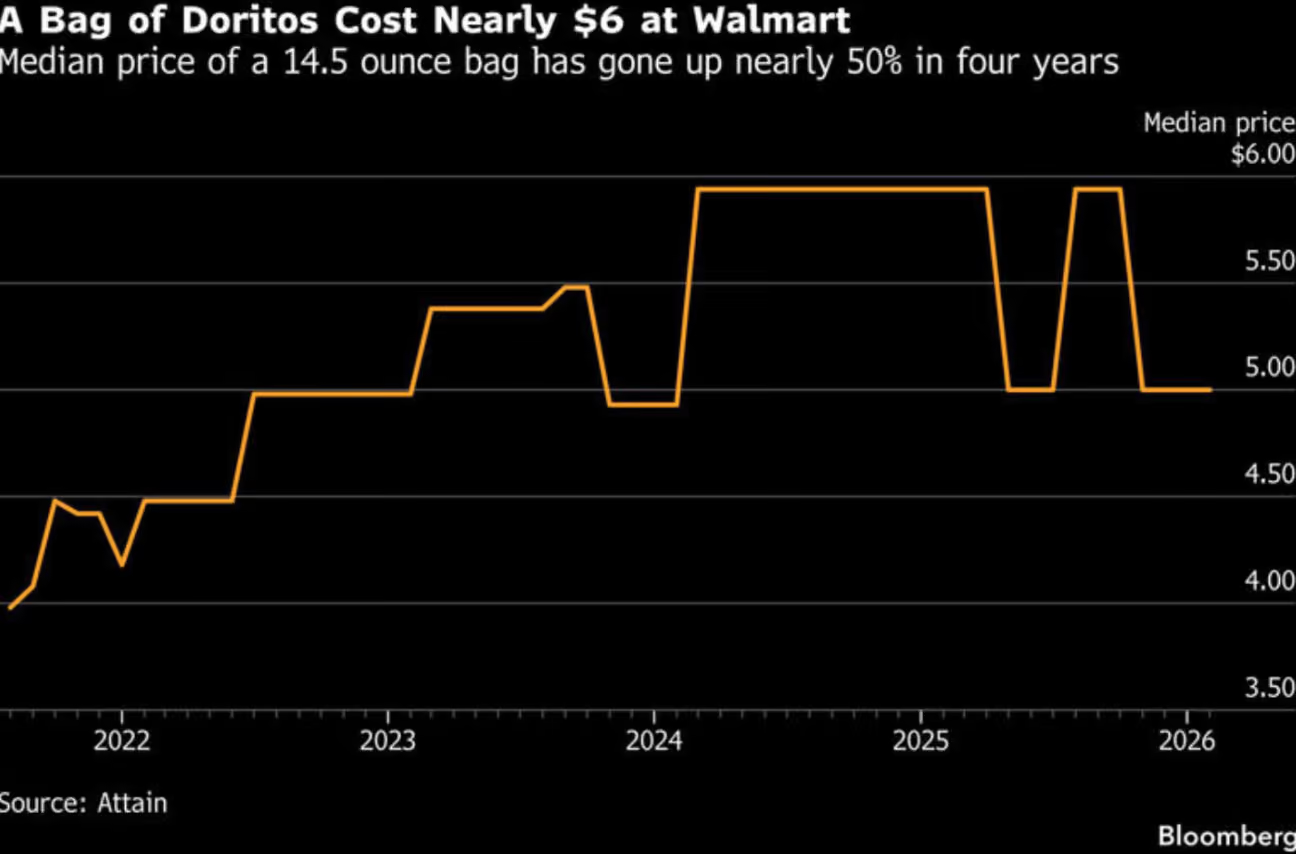
Prices for the iconic chip brand hit an eye-popping $7 in some locations in 2024, causing a massive reduction in sales. Walmart, which prides itself on offering its customers value, cut Dorito’s shelf space, replacing it with competing snack chip brands and its cheaper in-house label. The effect on sales was so drastic that Frito-Lay’s revenues were negative that year, according to a new report from Bloomberg, which draws upon shopping data from Attain to track the price of Dorito’s over time.
And yet even with its balance sheet in the red and its retail partners upset, Frito-Lay resisted reducing prices, instead trying to bolster margins with promotions and reducing the number of chips in the bag. A price cut would slash revenues even further, and no Frito-Lay executives wanted to be on the hook for another quarter of missed revenue projections.
That decision would end up being a costly lesson in price elasticity, as sales slumped even further and, and the latest indication that consumers are fed up with the astronomical prices caused by inflation and that the so-called “vibecession” is on the decline.
Frito-Lay missed internal revenue goals in back-to-back years by $1 billion before deciding this year to bring prices back down. The median price for a bag of Dorito’s at Walmart is now $5, according to Attain data, down from a high of $6 in 2024 and 2025.
Now PepsiCo, Frito-Lay’s parent company, is singing a much different tune. Rachel Ferdinando, the head of PepsioCo’s U.S. Foods division, told a conference audience in March, “Consumers have been clear: Affordability has never mattered more.”
That Frito-Lay was willing to lose billions of dollars instead of responding to a drop in sales and lowering prices bewildered analysts and delighted social media users who used the story to express their wider frustration with the high cost of living. The story about the $7 Dorito’s bag and the carnage it inflicted on Frito-Lay’s bottom line went viral on X, LinkedIn, Instagram and YouTube, the consensus among the audience being that it was finally a win for ordinary consumers, who are tired of feeling price-gouged.
In Frito-Lay’s defense, there was a time in the not so distant past that companies got away with charging exorbitant prices for goods. In the pandemic years, with supply chains strained and consumers flush with stimulus cash, prices went up dramatically, but so did sales.
The pandemic spending spree gave way to the “vibecession,” the term coined to describe the disconnect between positive economic indicators and consumers’ negative perceptions of the economy. Sales and economic growth were steady, but consumers didn’t feel the economy was in a good place, even as they continued to spend on luxuries such as dining out.
We are now in a period of slowing growth, as evidenced by back-to-back slow holiday shopping seasons. Consumer behavior and vibes are more in lockstep now, and the vibes are dismal — in April, the University of Michigan Consumer Sentiment hit a record low this month, in part due to concerns about the military conflict in Iran and its effect on gas prices.
High gas prices can drive up prices for all consumer goods. So the $7 Dorito’s bag might return once again, and with it, surely, lots of upset shoppers.
.png)


Stay ahead of the story.
Get the latest from The Outcome—expert takes on the industry, emerging trends and exclusive insights into how consumers are actually spending.