$1,000 “Supplement Stacks” are Trending, But Attain Data Shows The Average Person Isn’t Buying It
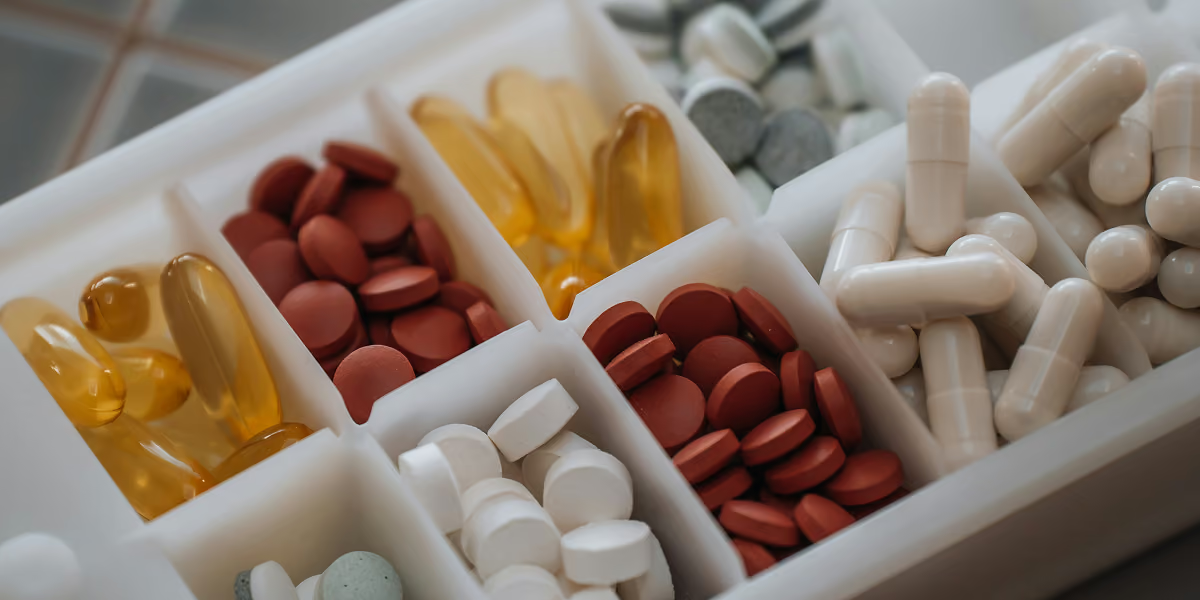
Attain’s transaction data shows that for most Americans, supplement spending looks nothing like the $1,000-a-month obsession dominating social media.
A recent Wall Street Journal piece captured a familiar scene: influencers organizing elaborate daily “stacks” of capsules, powders, and injections. These health & wellness social media stars claim they’re spending upward of $1,000 a month on supplements. It’s all to “optimize” their sleep, cognition, fertility, and longevity, they say.
Biohacker Dave Asprey claims 150 supplements a day. Bryan Johnson logged 111 before commercializing his own line. The WSJ portrays a booming market driven by social media performance and identity-level wellness spending.
Attain’s transaction data finds a more complicated story.
Across mass-retail supplement purchases — spanning Vitamin Shoppe, GNC, Costco, grocery chains, and drugstores — spending has been essentially flat over the past 12 months. The average supplement buyer spends roughly $20 per month, with per-transaction spend averaging around $17 and purchase frequency hovering at about 1.2 trips per month. Those figures haven’t moved meaningfully in a year.
Granted, influencers are touting smaller, direct-to-consumer brands rather than the larger retailers cited in the Attain data.
Nevertheless, the gap between the influencer narrative and actual consumer behavior is real, but it isn’t necessarily a contradiction, says Allen Adamson, co-founder and managing partner at brand consultancy Metaforce.
“The real healthspan playbook is boring,” Adamson says. “Sleep, movement, friends, and vegetables. It doesn’t photograph well, and nobody can monetize it, so the market sells the $1,000 version instead. That’s the influencer’s job. Take a free, unsexy truth and repackage it as a stack you can buy, post, and belong to.”
What the WSJ piece reflects, Adamson contends, is a genuine cultural shift in how people think about health — even if mass consumer spending hasn’t caught up.
The mainstreaming of “healthspan” as a concept — accelerated by books like Peter Attia’s Outlive, Zeke Emanuel's bestseller Eat Your Ice Cream, and Kara Swisher’s CNN series on longevity — has made long-term vitality a mainstream aspiration. Whether consumers are chasing it with a $1,000 stack or a $20 bottle of magnesium, the underlying motivation is the same.
“People aren’t buying supplements,” Adamson says. “They’re buying the brand promise that they’ll still be sharp and strong at 85.”
For advertisers, that distinction matters. The influencer-driven premium segment is loud and visible, but Attain’s data suggests the broader supplement consumer is a far more modest spender making routine, low-frequency purchases at mass retail. The category isn’t experiencing the dramatic escalation that social media would suggest.
That doesn’t mean the opportunity is small. It just means it’s different.
“Wellness used to be something you did,” Adamson says. “Healthspan is something you are. That’s identity-level brand loyalty, and it doesn’t unwind. Individual brands will come and go. Most of today’s stacks will be the SnackWells of wellness. But the category is here to stay.”

.png)

Stay ahead of the story.
Get the latest from The Outcome—expert takes on the industry, emerging trends and exclusive insights into how consumers are actually spending.