Voices from the Summit: Amie Owen, Chief Commerce Officer, Kinesso | Omnicom Media Group
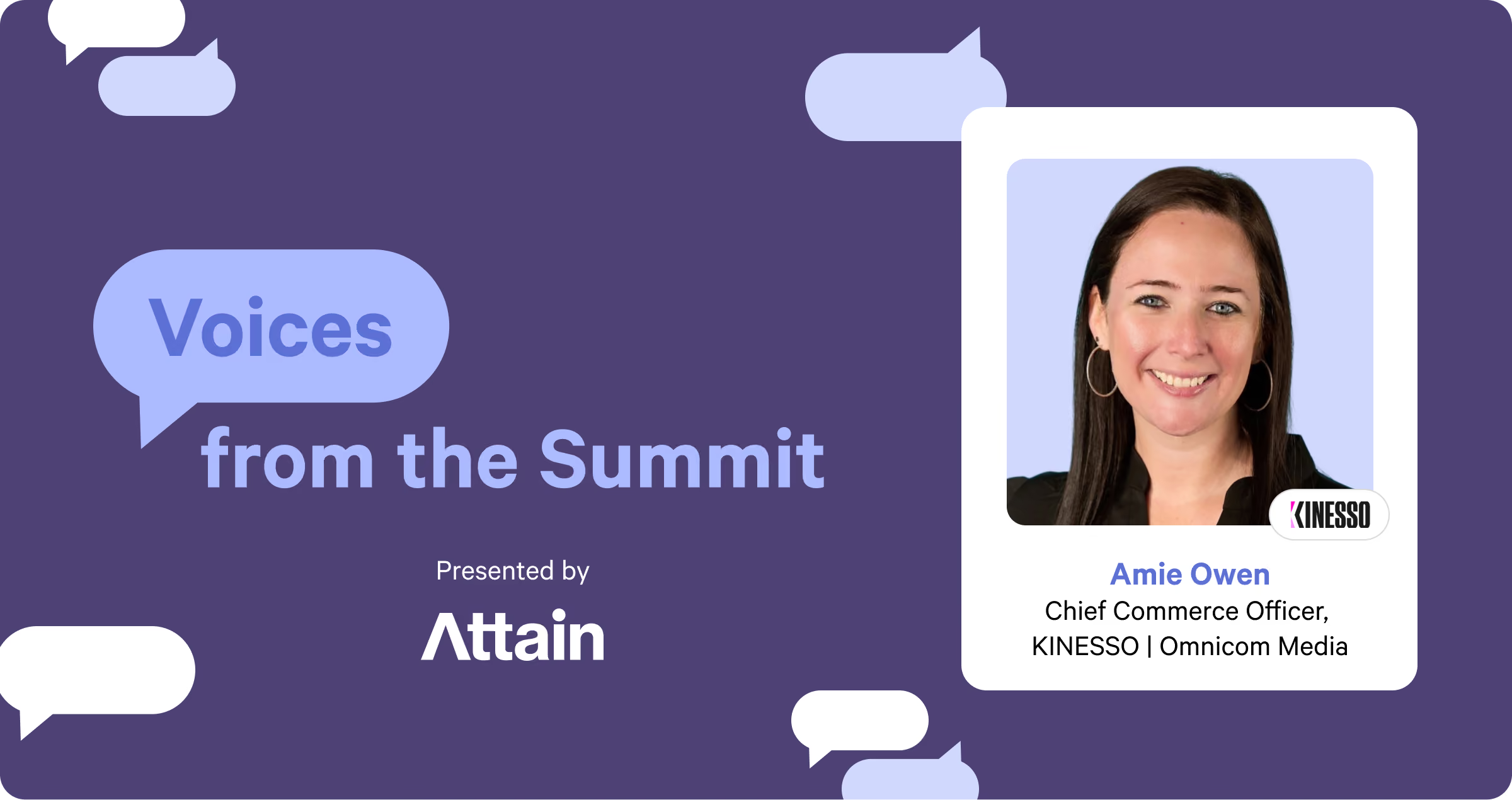
Amie has spent her career at the intersection of what used to be called shopper media and what the industry is now scrambling to call commerce — starting on the sales side with coupon machines and shelf talkers, eventually becoming a strategic hire tasked with building a commerce practice from scratch. That practice now spans 3,000 people globally inside the Omnicom umbrella.
In this episode, she sits down with Claire BeDell, Editor of The Outcome, to go beyond the Summit stage: what "total commerce" actually demands, why creative and retail readiness are the legs most brands ignore, and what a beauty brand's in-store sales data revealed that no one saw coming.
Commerce is a four-legged stool, often with wobbly legs
"It's not just about media, but it's about business sales, understanding the north star."
Amie's framework for total commerce has four components: media inventory, creative and messaging, technology enablement, and retail readiness. Most of the industry's attention goes to the first leg. The last one may matter most in the long run.
Retail readiness means ensuring that all of a brand's digital properties — product pages, owned dot-coms, D2C sites — are consistent, current, and crawlable. When a consumer asks an AI assistant for a product recommendation, it pulls from the open web. If a brand's pages are outdated or inconsistent across retailers, it loses the recommendation. With potentially thousands of SKUs across ten major retail partners, keeping all of it current is an operational challenge most clients are only beginning to reckon with.
What combining identity data with purchase data actually unlocks
Working with Attain's product-level purchase data alongside Acxiom's identity and behavioral signals, Amie's team found something no one expected in the beauty category. Audience data showed heavy engagement with digital try-on tools — AI-powered features that let consumers test products on their phones. A digital-first campaign seemed like the obvious call. But the purchase data told a different story: a meaningful portion of those same consumers were completing the transaction in-store, wanting to look and feel the product before buying.
The insight led to a campaign that brought the AI try-on experience into the physical store environment, connecting the digital behavior audiences loved with the location where they actually converted.
Measurement needs to match the objective — not the other way around
"We make the assumption that brands want to know one thing from all of our retailers, but in reality, it should be all different."
Amie has shifted her position on standardization. For years, the industry pushed for a single measurement framework. She now argues that's the wrong goal. Different brands have fundamentally different questions: some want to track new user acquisition, others want share of voice at specific retail partners, others are focused on incrementality — whether media is driving sales that wouldn't have happened without it.
Her prescription: retail media networks should offer a menu of five or six measurement solutions, and help clients match the right tool to their actual objective at the start of a campaign. Build the measurement and learning plan before the media runs, grounded in the client's real north star. Not a default ROAS calculation applied after the fact.
Commerce media can be for everyone
"Commerce isn't just one thing. There's multiple things that fall underneath the commerce umbrella."
Amie still encounters brands who say retail media isn't a fit for their category. Her response: they're confusing the category with one platform. Commerce media includes shoppable technology, data partnerships, and cross-channel strategies that connect a consumer from awareness to purchase — wherever they are. There's a version of it that works for every category. Some are deeply invested and sophisticated. Some have tested the edges. Some haven't started.
"It's not for me" usually means the right shape hasn't been found yet.



Stay ahead of the story.
Get the latest from The Outcome—expert takes on the industry, emerging trends and exclusive insights into how consumers are actually spending.