Consumers Say They’re Pulling Back, But Purchase Data Shows Otherwise
According to Attain’s Q1 Reality Check report, economic uncertainty has decreased consumer confidence, but it’s yet to change their spending behaviors.
There’s a major disconnect between how consumers think about their spending and their actual spending behavior.
That is, consumers think they’re spending less due to high prices caused by inflation and economic uncertainty, but in actuality, consumers spent more in the first quarter of 2026 than they did a year prior, according to a new study by Attain.
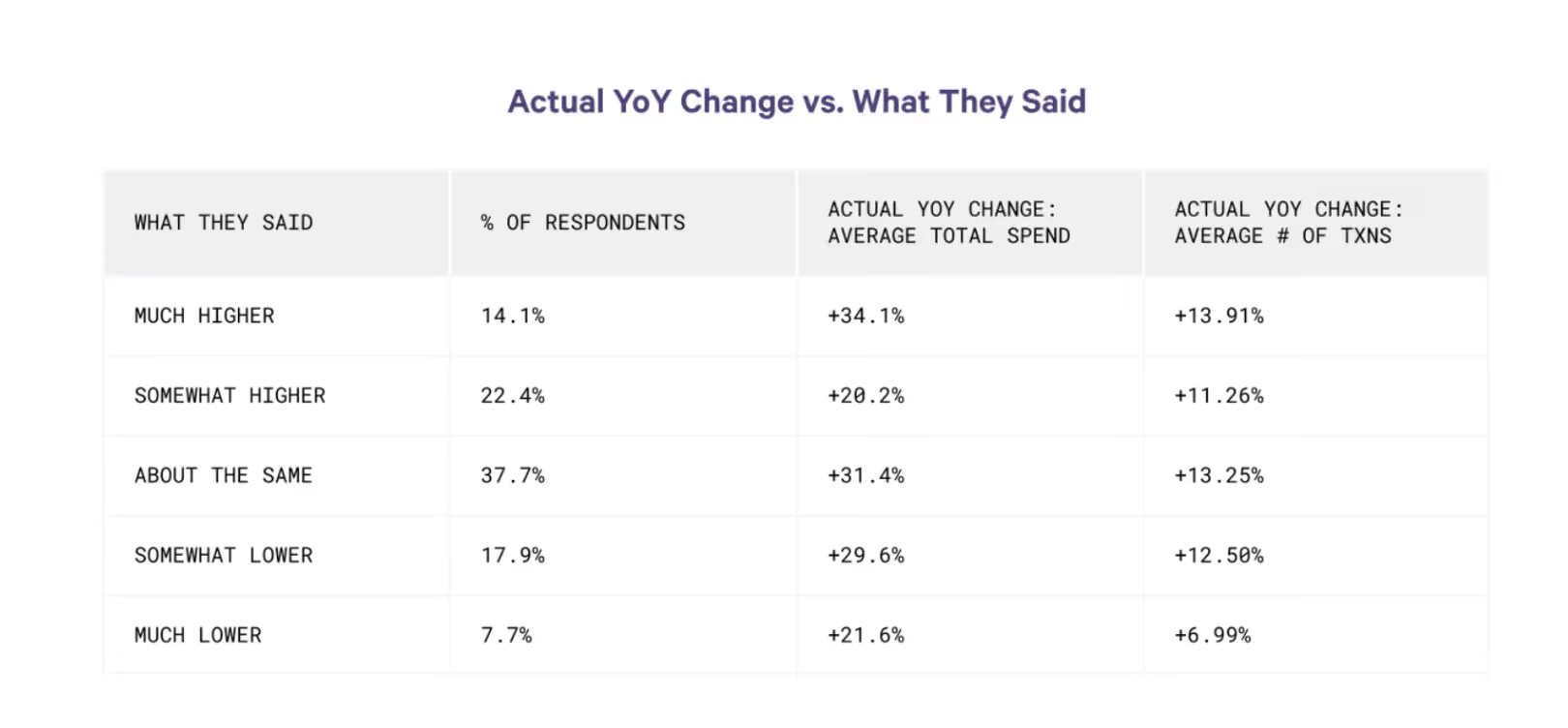
Consumers who believed their spending was “much lower” in Q1 increased their spending by 21.6 percent year-over-year. Those who thought their spending was flat spent 31.4% more than the previous year.
Attain revealed the disconnect by surveying nearly 6,000 consumers and then comparing their responses to their actual spending habits.
Survey respondents were asked to rate their Q1 spending on a five-point scale — from “much lower” than the previous year to “much higher.” Spending was up across all five categories.
The disconnect between consumer sentiment was evident throughout all the survey questions.
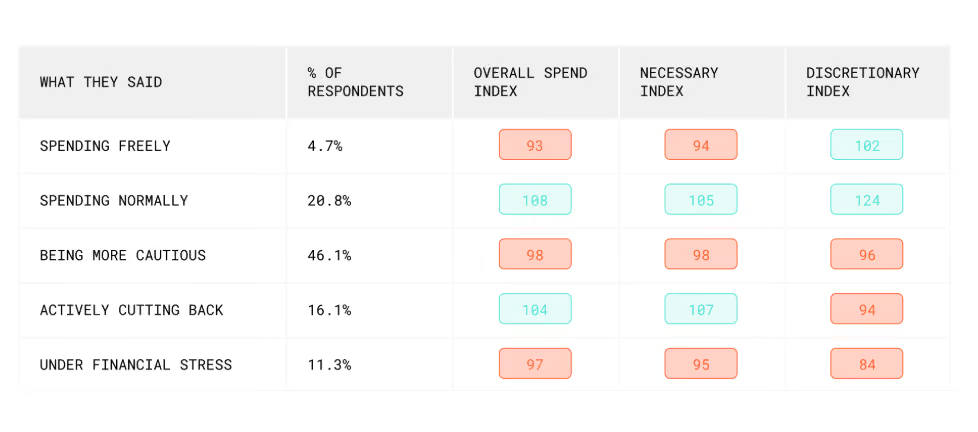
In a separate question, 41.6 percent of respondents reported “being more cautious” about their spending this quarter — but that same cohort spent only slightly less than the average customer, scoring a 98 out of 100 on a consumer spending index. The 16.1% of consumers who said they are “actively cutting back” on spending actually spent more than the average consumer.
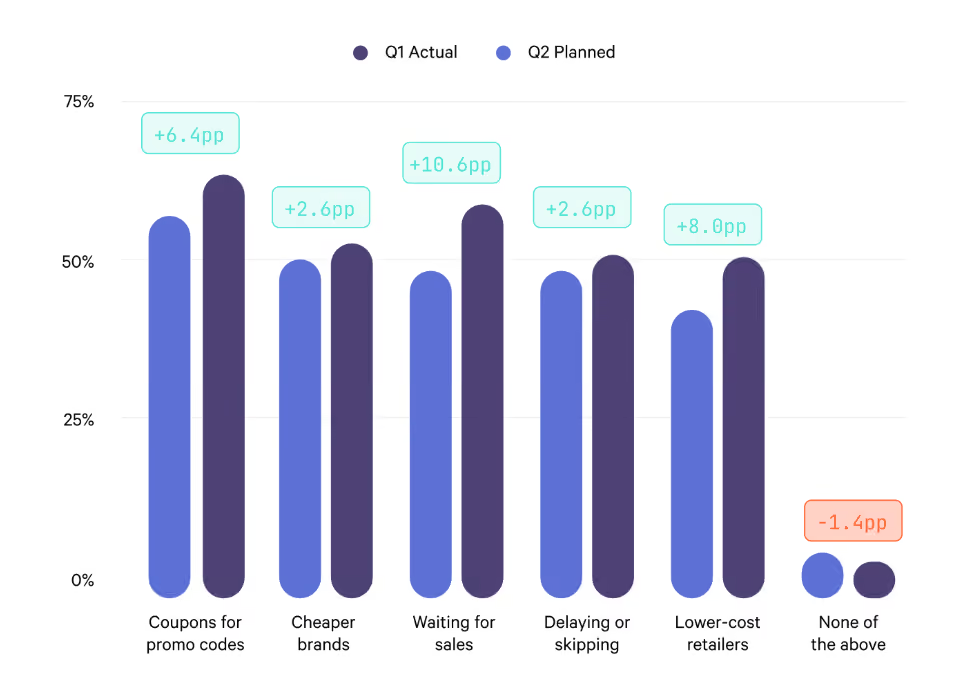
Even when consumers actively tried to spend less, they still ended up spending more. Consumers who engaged in cost-saving behaviors, such as using coupons and shopping at bargain retailers, frequently outspent consumers who made no such adjustments. Three out of five consumers (61.9 percent) said they were waiting for items to go on sale in Q2 before making a purchase, but only 51.3 percent of consumers did so in Q1.
“The most important variable in consumer spending is the labor market,” says retail analyst Andrew Lipsman, who runs the consultancy Media, Ads + Commerce. “When unemployment is low, people have discretionary income and they tend to spend it. High gas prices and inflation have a dampening effect on consumer purchasing power, but the overall consumer spending environment remains solid. If we begin to see layoffs meaningfully affect the unemployment rate, that’s when we’ll see spending habits shift along with it.”
The disconnect was especially stark for Gen Z, which reported low financial confidence but whose spending didn’t drop.
Consumers were better at identifying specific categories in which they’ve reduced spending. Among consumers who said they cut back on eating out, restaurant spending was down 30.8 percent. For consumers who named entertainment as their primary cutback category, spending was down 70.9 percent. Grocery spending was down 29.1 percent for consumers who said they reduced spending in that category.
The data suggests that while consumers can track category-specific purchase decisions — say, cooking at home more often instead of ordering DoorDash, or cancelling certain streaming services — they still struggle to assess their financial behavior in the aggregate.
It’s a long-held psychological truism that people portray themselves more favorably in survey responses than their actual behavior indicates. In this case, consumers want to believe they’re adhering to tighter budgets due to a mix of economic challenges, but they are still spending freely.
It’s understandable why consumers would have low confidence in the economy and want to enact austerity measures. Prices are high due to the historic inflation rates caused by the pandemic, military conflict in Iran has driven up gas prices and there’s widespread angst about job security due to advances in artificial intelligence (especially among Gen Z, who have been increasingly negative towards tech and AI).
Marketers can take temporary solace knowing spending is holding steady, but there’s only so much strain consumers can take before something has to give.

.png)

Stay ahead of the story.
Get the latest from The Outcome—expert takes on the industry, emerging trends and exclusive insights into how consumers are actually spending.