Out-of-Home Proves Itself a Valuable Ad Channel Despite its Analog Roots
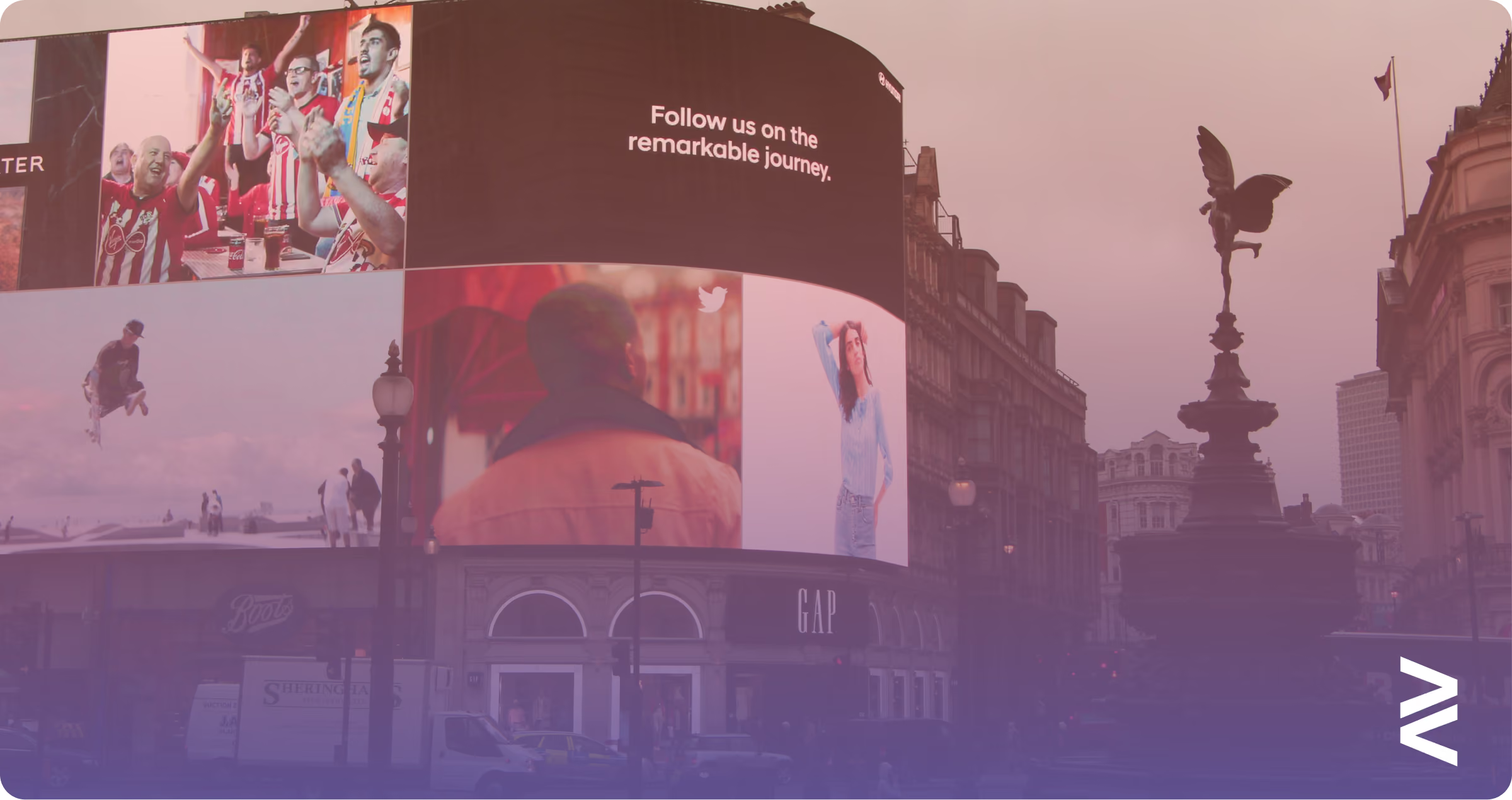
Advances in measurement have helped out-of-home become a steadily growing ad channel.
Marketers continue to shift their ad spending to more measurable forms of media, yet one of the most steadily growing advertising channels is the (mostly) analog out-of-home (OOH) advertising category.
Spending on OOH has risen for 18 consecutive fiscal quarters, according to the Out of Home Advertising Association of America, the industry expects to increase the streak to 19 quarters when the next quarterly results are posted — growth that advertising executives attribute to improvements in OOH measurement and the refreshingly analog nature of OOH ads in a dizzying, overcrowded media environment.
“OOH is having a little bit of a moment,” says Brian Binder, senior director of growth and innovation at performance marketing agency Tinuiti. “It’s not as analog and unmeasurable as people have thought in the past.”
Billboards and bus stop placards would, at first glance, seem like the least measurable forms of advertising around, and thus negligible in an era when marketers expect to be able to measure the effectiveness of their ads down to how much they contributed to sales lift.
OOH isn’t strictly analog anymore, though. The proliferation of digital billboards have made it easier to execute OOH campaigns. Marketers can now buy OOH space across the country from a single media buying platform, instead of having to broker deals with each individual billboard operator. And OOH can now be measured beyond brand lift. Sophisticated data gathering methods have allowed marketers to measure OOH in terms of outcomes.
Measuring OOH starts with using mobile location data to determine whether consumers were exposed to an OOH display. These consumers are then retargeted on other digital channels, using mobile ad IDs and identity matching from first- and third-party data sources, where they are pushed further down the purchase funnel.
“When we look at audiences exposed to OOH, they typically perform better than purely digital audiences,” Binder says. “OOH helps improve outcomes and performance in general.”
Tyler Tinker, director of analytics at AdQuick, a platform for buying and measuring OOH ads, reports similarly positive results, saying that, accoridng to the firm’s media mix modeling studies, OOH ads generally deliver a $2.49 return on every $1 spent. This in part due to the low cost — CPMs for OOH ads are often less than $2.50.
But it’s also because OOH advertising allows for some happy accidents. That OOH ads exist in the real world, where anyone can stumble upon them, also creates opportunities that hypertargeted digital campaigns can’t provide. “You’re going to get impressions from folks who aren’t in your target audience,” says Tinker. These can help brands increase awareness and bring new consumers into their marketing funnels.
Christina Radigan, Chief Research Officer at OUTFRONT, a company that controls more than 500,000 OOH display canvases across the country, pointed to two recent client success stories as examples of OOH’s power and appeal. Consumers who saw IRL ads for a popular weight loss drug brand were twice as likely to visit the brand’s website, and a beer brand saw an 8 percent sales lift from consumers who saw its campaigns.
Both buyers and sellers agree that, while measurement is important, OOH’s growth is largely a function of its analog appeal.
“Consumers don’t want to be as inundated with media as they have been in the immediate past,” Binder says. “OOH allows you to engage with users in a less pushy way.” Binder cites the unexpected resurgence of dumb phones as proof of consumers’ exasperation with being bombarded with media.
OOH is looking for ways to further integrate into the digital media ecosystem. Radigan says OUTFRONT is looking to partner with retail media networks, such that a consumer-packaged goods brand can coordinate its in-store advertising with the IRL media shoppers might see on their drive to the grocery store.
The appeal of OOH will remain its physical nature, however. “Consumers really trust OOH,” Radigan says. “They trust what’s tangible — what they can see, what they can feel.”

.png)

Stay ahead of the story.
Get the latest from The Outcome—expert takes on the industry, emerging trends and exclusive insights into how consumers are actually spending.