Consumers Chose Value Over Volume This Holiday Season—And That Strategy Will Persist
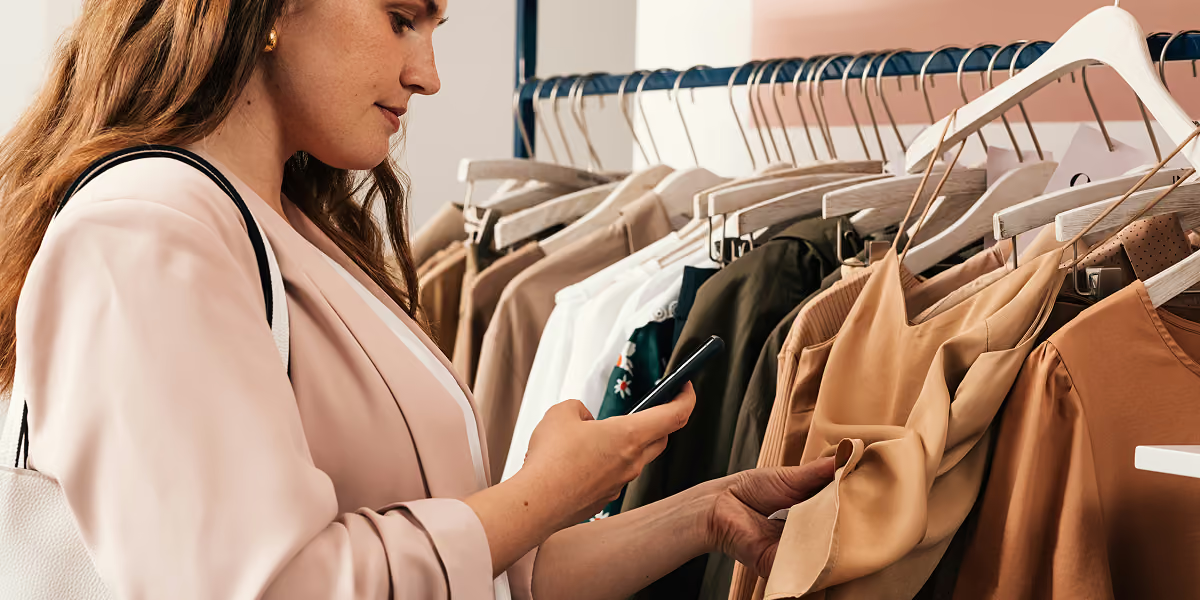
Attain’s holiday survey shows shoppers traded down to affordable brands, bought gifts earlier to avoid price hikes, and leaned on rewards programs — behavior that will likely persist through 2026 as volatility continues.
According to Attain’s latest holiday survey analysis, the story of the 2025 holiday season wasn’t budget collapse but budget discipline.
While 45% of consumers reported lower holiday budgets compared to 2024, actual spending patterns showed modest stability with tactical shifts toward value-seeking behavior.
“Consumer spending in 2025 didn’t lurch or leap. It rose modestly, steady and measured, with shoppers behaving less like impulse buyers and more like value auditors,” says Alicia Gehring, SVP of Media Strategy at White64. "The headline wasn’t ‘stop spending.’ It was ‘spend with receipts.’”
Paths to Value
The shift toward value manifested in a few distinct behaviors, according to Attain survey data. About 22% of consumers traded down to more affordable brands, 21% bought gifts earlier to avoid price hikes, and 23% leaned heavily on rewards programs and coupons. When asked what would drive them to switch brands for gifts, 40% cited better pricing — far outpacing availability (10%), reviews (16%), or sustainability concerns (8%).
When the Wealth Effect Evaporates
The wealth effect that powered 2024’s stronger-than-expected holiday performance appears to have dissipated. And that’s left advertisers banking on continued momentum with more uncertainty and anxiety.
“Last holiday season’s spending spree wasn’t built on wage growth or economic fundamentals, it was fueled by two very different emotions: greed and fear,” says Allen Adamson, co-founder and managing partner at brand consultancy Metaforce. “You had one cohort watching their 401Ks surge on the AI stock rally and feeling wealthy enough to splurge. And you had another cohort racing to buy before tariffs made everything more expensive. Neither of these triggers is sustainable.”
The volatility extends beyond consumer psychology into market fundamentals. “The wealth effect is like a light switch, it can flip off instantly,” Adamson says. “Unlike steady wage growth, which gives consumers confidence to spend, a stock market correction can evaporate that feeling of prosperity overnight.”
Building for Persistent Volatility
Gehring sees these patterns persisting as external volatility continues. “These habits will continue into 2026,” she says. “The world remains noisy: global conflict headlines, national and international events, and jobs reports that can swing sentiment in a single news cycle. When the world feels jumpy, consumers grip the steering wheel a little tighter, and value becomes a form of reassurance.”
The mobile shopping shift adds another layer of complexity. Smartphones have evolved beyond checkout devices into comparison engines where people are browsing longer, comparing more, and pressure-testing options before they commit. This extended research phase pushes promotional windows earlier and demands more flexible media strategies.
“For advertisers, the implication is clear: test earlier, learn faster, and be ready to pivot quickly,” Gehring says. “Validate messaging and offers well before peak periods, especially in search and social where intent shows up first and pivots quickly.”
Adamson frames the challenge more bluntly. “The message for advertisers is simple: build flexibility into everything,” he says. "Your media plans, your messaging, your budgets, all of it needs to be nimble. We’re in an environment where consumer confidence can crater in a week, not a quarter. The brands that win will be the ones ready to pivot when the winds shift, not the ones locked into rigid annual plans.”



Stay ahead of the story.
Get the latest from The Outcome—expert takes on the industry, emerging trends and exclusive insights into how consumers are actually spending.