Ads Are Coming to ChatGPT. Here’s What You Need to Know According to the Experts.
.avif)
The era of AI advertising is imminent. What it will look like, no one can be entirely sure.
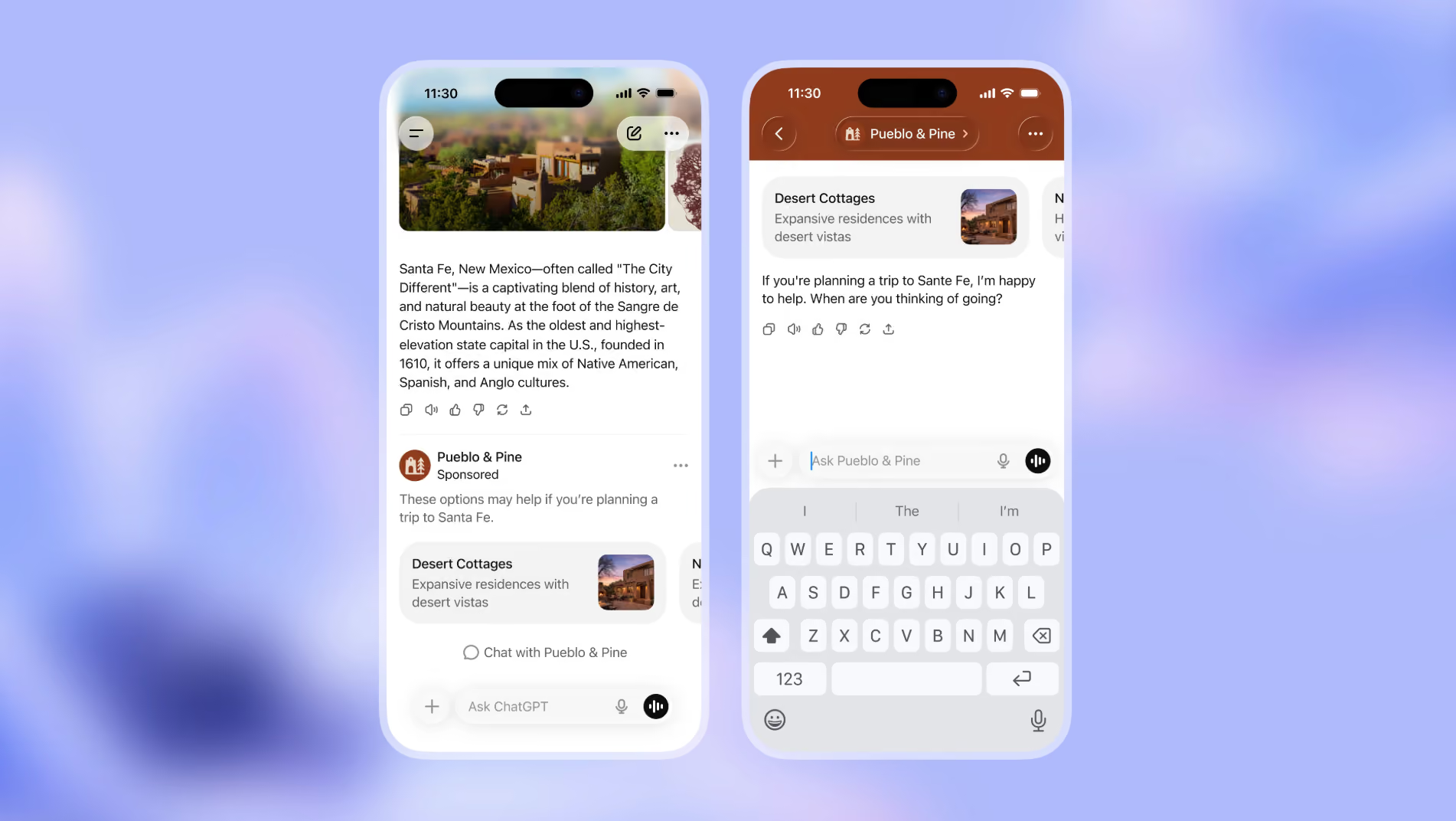
It seemed inevitable and soon it will be a reality: Ads are coming to ChatGPT, marking a major milestone for both the AI and advertising industries.
OpenAI, the company behind ChatGPT, the most popular AI chatbot in the market, is forging deals with brands to run ads on the chatbot starting in February. The ads will cost brands less than $1 million for a weekslong trial period, and the ads will be priced per view, as opposed to the cost-per-click or per conversion model often used by Google and many retail media networks.
With the introduction of advertising, OpenAI joins the list of technology companies that publicly denounced advertising in their early years, only to later embrace ads once pressure mounted to earn more revenue. (See also: Amazon, Tumblr, Netflix.)
This development comes as no surprise to media industry veterans, who have long anticipated advertising’s incursion into the rapidly growing AI media ecosystem and have been eagerly preparing for this new advertising channel to open up.
But even with all the preparation, few can agree what the future of AI advertising will be now that its start is imminent. OpenAI hasn’t publicly revealed details about how its ads will function, leaving media executives to speculate on and scramble to adapt to an unknown future.
ChatGPT ads are pricey (for now)
Some industry executives calculate ChatGPT ads will cost $60 per thousand views, or a $60 CPM, a large sum considering CPMs for ads on popular streaming services are typically half that price, according to research firm eMarketer.
The high price is due to all of the hype surrounding ChatGPT and its foray into advertising. Brands that want to be part of ChatGPT’s splashy ad rollout and reap the benefits of early learnings, they have to pay a premium.
“The market will not support this price level beyond early experimental budgets,” says Andrew Lipsman, a longtime comScore and eMarketer analyst, who now runs the independent consultancy Media, Ads + Commerce.
CPMs will inevitably turn into CP-somethings
But don’t expect the CPM model to last, experts say. CPMs imply the ads are for brand-building and reach, but the very nature of AI chatbots is users making queries about specific categories, companies or products, an intent signal that naturally lends itself to bottom-funnel, outcome-based ad models. Then there’s the industry-wide collapse of the marketing funnel altogether, wherein even branding and reach campaigns are measured these days by their ability to drive sales.
“Ever since Google, tech platforms have positioned their advertising products less like traditional advertising and more as a cost of sales,” says Brian Morrissey, founder of The Rebooting, the newsletter and events company covering the future of media. “ChatGPT will inevitably sell on a performance basis to compete with Google and Meta.”
The consensus is that OpenAI will quickly switch to cost-per-click, or some other conversion-based metric, for its pricing structure.
“I’d be shocked if this didn’t move to a CPC model,” says David Berkowitz, founder of the AI Marketers Guild, an industry trade group. “The whole challenge with using AI instead of search is that people click way less, but those clicks are more valuable."
Or OpenAI could create a unique pricing model tailored to this new form of advertising. Jason Goldberg, Chief Commerce Officer at Publicis, projects that AI ads might eventually settle on commission-based, where the AI agent both serves the ad and completes the transaction for that brand.
Consumers probably won’t like the ads at first
“But bottom-funnel ads get tricky for an answer engine because they will be in conflict with the organic response,” Lipsman says.
This tension, between OpenAI’s need to earn advertising revenue and the consumer experience, is something all major consumer platforms — Facebook, Google, Instagram, Twitter, Snap, TikTok — have grappled with in their maturation. If history serves as any barometer, there will be some mild annoyance among users about ads but they will quickly grow accustomed to them.
Goldberg calls this the “creepiness to cool” curve. “Initially, there's always a ‘get these ads out of my private experience’ reaction. But as soon as the ad actually solves a problem, like finding the exact part for a broken dishwasher, it stops being an ad and starts being a feature.”
Organic AI distribution is more important than ads
Although advertising promises brands a way to insert themselves into high-value, intent-based searches, the brands that fair best in the AI era will be those that prioritize organic distribution in AI chatbots by virtue of publishing content AI engines deem accurate, important and helpful to users. GEO, generative engine optimization, is replacing search engine optimization (SEO).
“We need to recognize that users are moving away from simple keyword queries toward complex, conversational problems, which means our advertising strategies must transition from capturing clicks to influencing AI's entire reasoning process,” Michelle Merklin, VP of paid search innovation and growth at Tinuiti, a performance marketing agency. “To truly win in a world where ChatGPT provides the answers, your organic signals—like structured content, topical authority, and off-site citations—are no longer just SEO tasks; they are the essential data points that will eventually feed and validate the paid ad placements.”



Stay ahead of the story.
Get the latest from The Outcome—expert takes on the industry, emerging trends and exclusive insights into how consumers are actually spending.